Monday, March 3, 2014

27. Brief Encounter (1945)


I love a good tragic romance. This was one of the very early films David Lean made as director (he came up the ranks as an editor) and it's one of his best. The plot is simple: two married thirty-somethings meet, feel a mutual attraction, and struggle to maintain control and not betray their spouses. The backstory behind the success of this movie is really interesting: it touched a nerve with local middle-class audiences because they saw the middle class as the moral compass of England and they could relate to the character's feeling stuck in polite but passionless marriages. The story is framed as a flashback: the film begins with the main characters' final meeting and then backtracks to explain the stinging goodbye.

A masterclass in restraint all around. I like that it keeps the focus on the two main characters and doesn't waste time with subplots. There are only a few supporting characters, and one of them is the lovable Stanley Holloway, best known for playing Alfie Doolittle in My Fair Lady. Like all of Lean's films, it has great cinematography. The use of Rachmaninov's piano concerto (used for comedic affect a few years later in The Seven Year Itch) is a nice touch.

Watch this movie!

26. Great Expectations (1946)

I'm going to pick up where I left off and pretend like I didn't take a nine-month break from blogging..

This film is widely lauded as the best film version of Great Expectations and is also on many lists of the best British films of all time, but it left me feeling a bit flat. This book is one of the most depressing books I've ever read, and I didn't feel like the film had the same emotional power or tone. What it does have is beautiful black and white cinematography--it deservedly won Oscars for both photography and art direction.


I really liked a couple scenes (the opening sequence and, later, the house fire) but overall, the sum total didn't make me feel much of anything.

fun facts: this film stars young Jean Simmons (as Estella) and Alec Guinness (as Herbert Pocket); Guinness acted in the stage version that inspired David Lean to make this film.


Wednesday, June 5, 2013

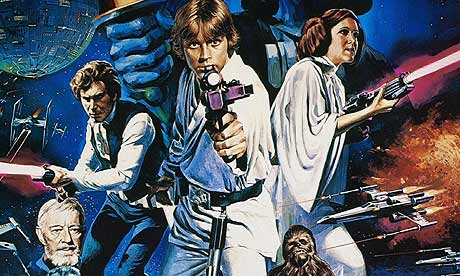
23-25. Star Wars Episodes IV, V, and VI


I watched the three original Star Wars movies back to back to back on May 4th this year, since it is Star Wars Day and all.

I watched these movies frequently as a kid, but had not seen them for the last few years up until now. So it felt like I was watching something I used to like to see if I still like it as an adult.

The verdict: Yep. Still a magical movie experience. My favorite has always been The Empire Strikes Back, but this recent viewing gave me a stronger appreciation for A New Hope. I always like the exposition part of a story, and I love how the characters are introduced in Episode IV.

I did get kind of restless part way through the marathon though, so I think I will wait a few years before attempting it again.

I'll always connect Star Wars with my dad, whose story of seeing it on the big screen is my strongest and earliest memory of movies as a transformative experience. Also, "I thought they smelled bad on the outside" is one of his favorite quotes.

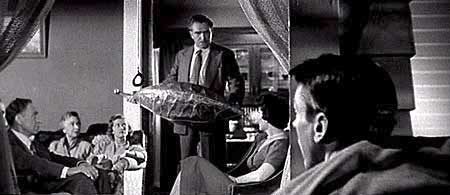
22. Invasion of the Body Snatchers (1956)


Another classic 1950s sci fi. This one isn't as overtly preachy as The Day the Earth Stood Still, but it does play on the sense of dread and paranoia so prevalent during the Cold War era.

The plot, in a nutshell:

The story depicts an extraterrestrial invasion in a small California town. The invaders replace human beings with duplicates that appear identical on the surface but are devoid of any emotion or individuality. A local doctor uncovers what is happening and tries to stop them.


I enjoyed this movie quite a bit. It has beautiful black and white cinematography, and there are some legitimately creepy moments. Recommended viewing for when you feel like staying in on a Friday night. Pour yourself a gimlet or a mint fizz and pop this in.

21. The Day the Earth Stood Still (1951)


A flying saucer lands in Washington, D.C. with a humanoid extraterrestrial (Klaatu) and his protective robot (Gort) companion onboard. Klaatu has been sent to preach disarmament to all the world's leaders, but is told that assembling a meeting would be impossible (it's the height of the Cold War and the US-Eastern Bloc rivalry). Klaatu was sent because the residents of other planets have started fearing for their safety ever since the humans of Earth began harnessing atomic power. Klaatu escapes his confinement in a hospital and ventures into human society; society responds with a paranoid witch hunt. Since he can't get access to the world's leaders, he seeks out the smartest man he can find, the Einstein-esque Dr. Barnhart, and explains that his home planet has solved the problem of violence by creating a robot police force. He also tells Dr. Barnhart and his scientist friends that if humanity lets its violent nature bleed over into space exploration, Earth will be destroyed by the robots. His final words of warning: "The decision rests with you...."

In addition to being a sci fi classic, this movie is also a great time capsule of Cold War-era social commentary. It's not the subtlest or most exciting movie ever captured on film, but it showcases what so many sci fi stories try to achieve: we humans get in over our heads, and placing us in extraordinary circumstances is sometimes the only way to expose us to our own naivete.

Book: What is the What

What is the What was one of the awesome books I read during the month of April.


It tells the story of Valentino Achak Deng, a Dinka who was one of the Lost Boys of Sudan orphaned in the 2nd Sudanese War. Valentino fled on foot with a group of boys and a teacher after their village was destroyed, and they walked all the way to Ethiopia, where they started new lives in a refugee camp. A few years later they were moved to another refugee camp in Kenya. Eventually, Valentino made it to America, where he has lived ever since.

My mom read this book a few years ago, and when my mom is really into a book she has a habit of updating me on it every day in vivid detail, recounting her favorite parts she has read the previous day. While she was reading this book, she kept saying, "Rachel, you read it and you just can't believe it. You just can't believe it." I specifically remember her telling me the Dinka tale that the book is named after.

A common theme of the book is the need to keep moving into the unknown: first the group is moving away from the Arab militias, then they're moving into Ethiopia (an unknown place to most of them), then Kenya (another unknown place), and finally America (where life turns out to not be so easy as they had hoped.)

The book is not all sad, though. There are a lot of funny parts about adapting to life in the various locations Valentino lived. One of my favorites revolved around a tampon box. Upon their first visit to an American grocery store, some of the Lost Boys were entranced by a tampon box because they thought it was really beautiful. Their host mother explained to them what it was for and that they had no need to buy it, but they bought it anyway and proudly displayed it as a centerpiece on their table at home.

I really enjoyed this book and would recommend it to anyone who enjoys reading for fun. It is a punch to the gut, but a good one.


Friday, May 17, 2013

Book: Going Clear


This may be the creepiest book I have ever read. It is also totally riveting and one of the best books I have read this year.

It covers L. Rob Hubbard's life, how he created Scientology, various scandals related to the church, the rise of current church head David Miscavage, and the relationships of various celebrities with Scientology. Lawrence Wright covers all the angles thoroughly. He conducted interviews with over 200 current and former Scientologists as part of his research, and he focuses heavily on the story of Hollywood screenwriter Paul Haggis' experience in the church. Haggis joined the church as a young man in the 70s and was a devoted member for 35 years before leaving in 2009. Lawrence Wright wrote an article for the New Yorker about Haggis' experience, in which Haggis called the church "a cult," and that article inspired Wright to write a book on the subject.

I saw The Master last year, which was rumored to be kinda/sorta based on L. Ron Hubbard's life, but not officially about Scientology. Now the movie makes a lot more sense because 1. a lot of the stuff in the film very closely mirrors L. Ron Hubbard's life and early events in Scientology history, and 2. I can see why the backers denied it being a film about Scientology, because church members love to harass anyone they deem threatening. I'm sure the principles involved still got their fair share of grief, even though they tried to distance themselves from any connection between the film and Scientology.

Large swaths of the tale told in this book are hard to believe. The extent to which Hubbard could manipulate others defies logic. There are a lot of heartbreaking stories about people who gave up their relationships with their loved ones in exchange, only to be later abused by the church. Hubbard himself alienated many of his close family members.

My dad once (jokingly) told me that "all you have to do to be a teacher is stay just one lesson ahead of your students." L. Ron Hubbard took that farce to the extreme. He had a gift for making up stories on the fly and writing quickly. He spun that into a career for himself and, ultimately, one of the greatest scams in history.

This book is a must read. Not just for the story it tells, but also for Lawrence Wright's journalistic prowess. I've added his earlier book The Looming Tower to my reading list.


Tuesday, May 14, 2013

Books: Beautiful Boy

I've read a string of really great books in the past few weeks. I finished this one most recently and it was the one that made the most impact on me, because my brother has a history of drug abuse and has been using for most of my life. Until now I have never gone out of my way to try and understand what it all means.


I originally ran across David Sheff's new book Clean while perusing an airport bookstore and put it on my reading list. But in doing some more research, I found that Clean was a follow-up to Sheff's earlier book Beautiful Boy, and I vaguely remembered reading some positive reviews of that book when it came out. I decided to start from the beginning of the story and picked up Beautiful Boy from the library.

I read it over the course of a few days and it got so intense in some parts that I had to stop and take breaks because the story made my eyes well up with tears. It resurrected some memories from my childhood I had not thought about in a long time, but remember vividly. There's a reason I haven't thought about in a while. They are some of the most painful memories I have. It also helped me make sense of a lot of the emotions I remember feeling back then, the helplessness, the hurt, the confusion over why my brother did things that made no sense at all when he seemed like a naturally smart kid.

It's just now hitting me that I really don't know my brother at all and I never have. Maybe I have known this for a while but couldn't verbalize it until now. He started using drugs when I was so young that I have only a few fuzzy memories of him before the drugs. All I know about his early years is borrowed from what my parents have told me. It's like in Blade Runner where the replicant Rachel insists she's a human because she has memories of her childhood and Deckard tells her they are implanted memories, taken from someone else. I'm just now realizing I never refer to my mom and dad as our parents and I don't think of them that way. They're my parents, they have always been there, while he has been in and out and had kind of a phantom presence.

And now I fully understand how much people change when they start using drugs. This is one of the hardest parts of drug addiction for families to cope with. The child they know vanishes and is replaced with a person who lies and steals. My brother became that when I was so young that I've never known what he is really like. We watched an old home video at a relative's house recently, and my cousins and I looked and acted like younger versions of ourselves. Seeing my brother felt like seeing a ghost, and impression of a person.

The timing of my finding this book feels like fate, if you believe in that sort of thing. I'd been wanting to spend time with my parents this summer and talk about certain things; for whatever reason, I feel ready right now to process big stuff like this. They did their best to shield me from what went on with my brother, but 20 years of near-constant worry and stress inevitably took its toll on them and me.

I got into the habit of not talking about my brother a long time ago because it seemed like opening up to people caused them to say things like "well why don't you just send him to rehab?" "Why don't you do [x]?" They made it sound like there was an easy solution to the problem and my family just wasn't trying hard enough. I used to wonder, why doesn't anything work? Why isn't he fixed yet? We did everything we could do. You just can't save a drug addict with love. There are tons of people out there just like us.

Why did I never take the time to learn about my brother's condition until now?? Maybe I just didn't want to think about it, it was too painful. My parents wanted me to be OK and I focused on making it to adulthood and creating a stable environment for myself. Now I'm ready to think about it all.

Sunday, April 28, 2013

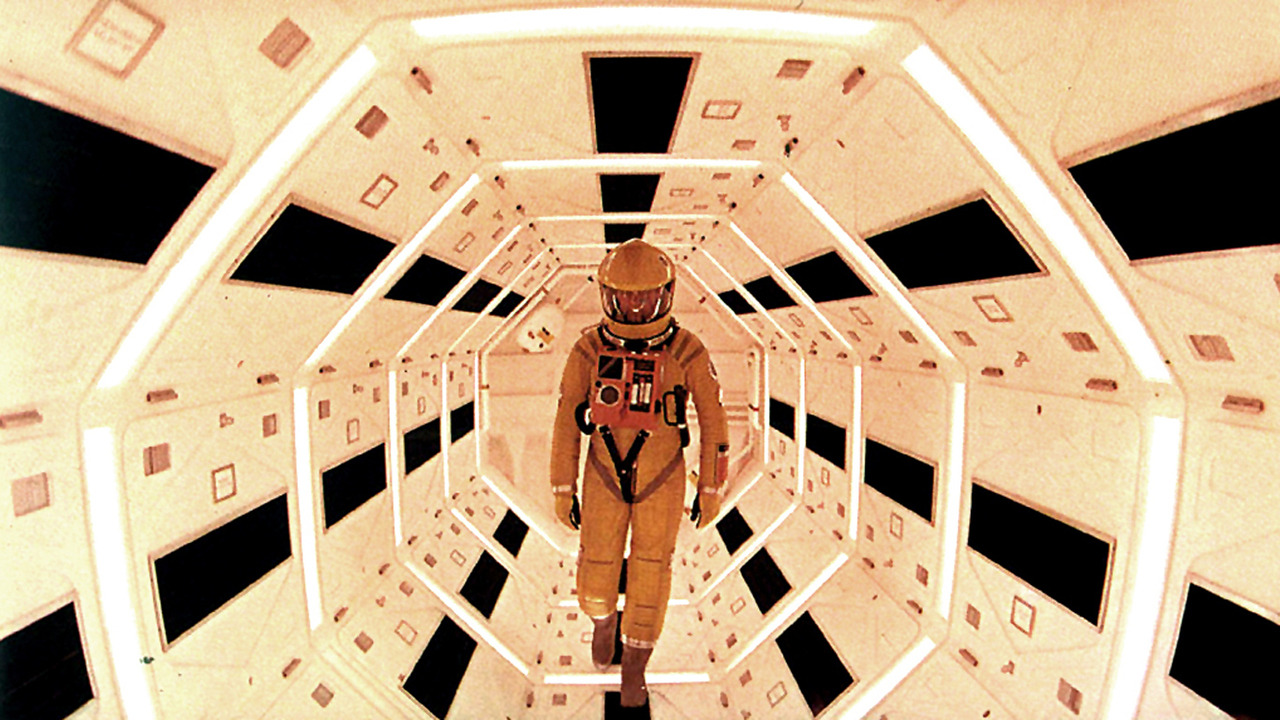
21. 2001: A Space Odyssey (1968)


I saw a good chunk of this movie on PBS when I was about ~10 years old, but this past week was the first time I actually sat down and watched it beginning to end. The parts I remembered from childhood include: the space station spinning to Strauss like a ballerina, the mysterious black monoliths showing up, and (most vividly seared in my memory), HAL singing "Daisy Bell" as he's being shut down.

I like most of this movie a lot. It achieves an epic feel without resorting to the usual glittery tricks other epic films employ (lush scenery, dazzling costumes, star actors to deliver crackling dialogue). What it lacks in instant gratification, it makes up for in thought provocation. The pacing is solemn and meditative. The starkness of it leaves you feeling unsettled.

I would put this movie in the category of "films you should watch once a decade." It is the work of a supremely confident director (if you ever needed proof that Stanley Kubrick was born to make movies, here it is. But I doubt you need it.) Kubrick was still in his 30s when he started production of this film. Pretty impressive.

Fun fact: the apes in the beginning section were portrayed by a mime troupe.


Wednesday, April 17, 2013

20. Spirited Away (2001)

Confession: I probably would never have watched this movie had it not been on the list. I don't normally seek out animated films, because I think of them as "kid movies." This movie shot that bias to hell. I'm so glad I watched it, because it is a masterpiece and totally deserves its place on the list. The story is surprising and creative and the animation is beautiful.

It reminded me of the book Haroun and the Sea of Stories, which is ostensibly a children's book, but is complex enough that I had to read it for a college English class. We spent a lot of time discussing the symbols and references in that book, and you can do the same with Spirited Away.


The story focuses on a 10-year-old girl named Chihiro, who is moving to a new town in Japan with her parents. On the way to their new house, they stumble across an abandoned theme park, and the parents get into some trouble. Chihiro then has to figure out how to save them.

If you haven't already seen this one, I hope you will check it out and be pleasantly surprised like I was. 

19. Blade Runner (1982)

Blade Runner is the first sci fi movie I can remember feeling blown away by.


I watched the Star Wars trilogy a lot as a kid, but it was just always around for me to watch whenever because we had the VHS tapes. I can't remember a time when I hadn't seen Star Wars yet. 

The first time I saw Blade Runner all the way through was a few years ago, during my original half-assed attempt to watch the movies in the book.

From the opening shot (below), the movie is just jaw-dropping. The art direction and music are perfect for creating this futuristic mashed-up version of Los Angeles. The whole thing is even more jaw-dropping when you find out that all the special effects were done in camera!


Ridley Scott proved himself to be a genre mix-master here, as he takes a noir film vibe and transplants it into a futuristic setting (2019--not so far off, now!). Throw in some heavy symbolism, and you've got yourself a sci fi epic. Except it was a flop when it came out in 1982.....

This is one of those special movies that has risen through the ranks of well-regarded films over the years. Time has served it well.


I watched the "Final Cut," which has no voiceover, includes the dream sequence, and does not have the original ending the studio tacked on. If you don't know what I'm talking about....get a copy of this movie immediately!!

Here is the opening scene, one of the best in film history:

Thursday, April 11, 2013

18. All the President's Men (1976)


All the President's Men tells the true story of two reporters, Bob Woodward and Carl Bernstein, who uncover the Watergate scandal while writing for the Washington Post newspaper. Of course, it's not yet the Watergate Scandal when they start out, it's just an odd burglary. But as they start to investigate, they realize something much bigger is afoot and have to fight to keep reporting on it.

I first saw this movie in high school history class. We watched a few other history-related movies, but this is the only one that stuck with me as being really good (I will never forgive my teacher for making us sit through all of Dances with Wolves.......). Everything about this movie is simple and straightforward, but the pacing and editing propel it into thriller territory. No time is wasted on backstories of the main characters or exposition. This is a procedural movie. It's less about the historic outcome and more about the process of chasing down leads that eventually nailed President Nixon. The music is unobtrusive and doesn't even start until half an hour in, but once it does, it increases your sense of dread. It takes place in mostly drab locations, and there's a ton of dialogue, but it is well-paced and engrossing the whole way through.

My favorite thing about this movie is the balance of earnest vs. goofy between Robert Redford and Dustin Hoffman. There is one great scene in particular that shows their initial interactions: Redford puts a finished piece in the stack of articles to be re-typed.....Hoffman strolls over, picks it up, and starts making corrections.....Redford feels wounded and walks over to ask Hoffman what he thinks he is doing. Watch:


Their relationship starts off uneasily, but they gradually ease into a symbiotic working partnership.

Jason Robards has the perfect amount of crust as publisher Ben Bradlee.


More crust here.

I wonder if young Aaron Sorkin watched this movie and felt inspired to become a writer.

American filmmaking at its finest.


Saturday, April 6, 2013

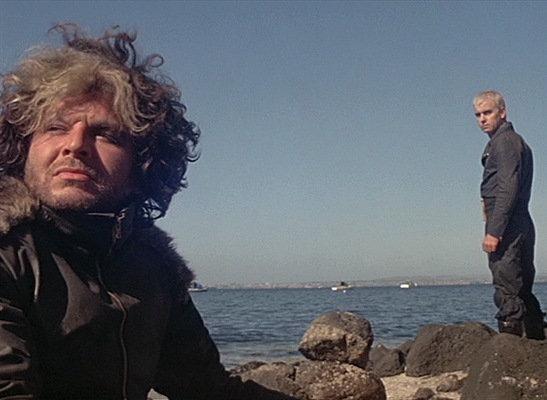
17. Mad Max (1979)


This was my first time ever watching this movie. I can see why it's a classic.

One of the things I worry about with my project is whether I will remember any details of individual movies after I've watched so many of them. Here's what I will remember about this one:

1. Mel Gibson was once young and innocent looking

All my memories of Mel Gibson are post-Braveheart, so it was refreshing to go back to what first made him famous and see him in all his fresh-faced glory. It's kind of mind-boggling to think about how much has changed for him in the interim and what a catastrophic fall from public grace he had. Maybe he was always destined for a troubled personal life, since he showed up to the first audition for this movie with facial injuries sustained in a bar fight.

2. This movie may be an Australian sci/fi, but it feels like an American western

Is it a bleak prediction of the world's future, a story of revenge and the triumph of good over evil, or a meditation on the themes of lawlessness and control that prevail in stories about the Old West? All of the above. Mad Max was inspired by incidents of violence related to the 1970s oil crisis and the director's experience working on car crash victims as an ER doctor. George Miller noticed that Australians would go to great lengths to keep their cars running. I've never been to Australia, but it sounds like their car culture is comparable to America's. The attitude embedded in this film reminds me of all the 2nd Amendment debates that are all over the news in the wake of 2012's shootings. What do people really need those guns/all that gas for? Doesn't matter. What matters is what they believe is within their rights, because that will drive their actions. Ideology is the greatest motivator.

3. The villains are memorable


It takes great skill to make a villain really scary. You need an actor who can portray someone so angry and unhinged that you actually believe they would do crazy and evil things. Hugh Keays-Byrne is pitch perfect as the Toecutter. 

4. It's got a great ending

I don't need to describe the ending, because you've probably already seen it. It is perfect and this movie would not be nearly so satisfying without it. 

Sunday, March 31, 2013

15. District 9 (2009)

What would happen if an alien spaceship came to Earth over South Africa?


District 9 tells the story of what happens after an alien ship appears over Johannesburg, South Africa in 1982. The locals watch and wait, but for months, the ship just hovers there with no signs of movement. Finally, the government sends in a team to investigate and it finds the ship is populated by a large group of very malnourished aliens. Suddenly the aliens become the world's newest refugee group. Humanitarian aid is called in, and a special area (the District 9 of the title) is built for the aliens to live in. There is one big problem, however: their ship is broken, so the aliens are stuck being South Africa's permanent guests. Over the next two decades, District 9 devolves into being a slum; this, added the governmental costs of keeping the aliens alive creates tension with the citizens of South Africa and leads to interspecies violence. By 2010, a decision has been made to raze District 9 and relocate the aliens to a new site 200 kilometers away from Johannesburg. The film opens with documentary-style interviews recounting the appointment of an affable and naive bureaucrat named Wikus van de Merwe to lead the eviction and relocation efforts. The interviews hint that something went terribly awry with the operation, and one interviewee mentions feeling like Wikus' actions during the operation felt like "a betrayal." You can't believe that happy-go-lucky Wikus is capable of doing anything to betray his fellow humans, but over the course of the film, you see the circumstances he is trapped in and how that alters his humanity.

I was blown away by this movie. It turned the premise of "aliens coming to Earth" on its head and tackles themes like racism, xenophobia, bureaucracy, and military force. The aliens land in an unexpected place, and they need our help, which we give. But then the alien issue turns from "how can we help them?" into "how can we get rid of them?"

Unsurprisingly, the plot was heavily influenced by the director's growing up during apartheid in South Africa. The razing of District 9 is even inspired by a real event when the residents of a mixed-race district in Cape Town were forcibly removed so their area could be used exclusively by the white population.

The most surprising thing about this movie is that it's the first feature film for both its director and lead actor. What a heck of a first film. I liked everything about it. It's framed by a faux-documentary that gives it a sense of realism. A lot of science fiction films are intended to be allegorical, but this one really brings it home. Highly recommended viewing.


Tuesday, March 26, 2013

I'm caving...sorta

I've decided to amend my original plan to watch the 1001 movies in chronological order. I'm already losing steam and I need to get my momentum back. I'm not always in the mood to watch a long silent movie, you know what I mean? From now on I'm not going to focus so much on chronology and just try to check movies off the list. I might do them thematically and spend a whole month watching dystopian sci fi, or go by director or country.

I've been in the mood to watch Blade Runner recently, so now I can. The new plan (to get through the list as fast as I can) starts.....now.

Moby Dick, the Essex, and Ships on the Silver Screen


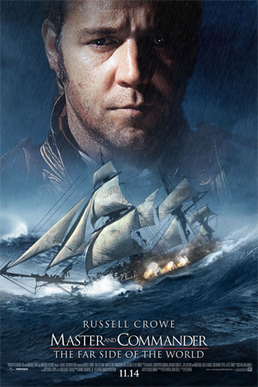
Remember a few years ago when Russell Crowe was in Master and Commander, that really awesome movie about a British warship that had an ending that was perfectly poised for a sequel? I'm really disappointed a sequel hasn't happened. I guess it's still possible, though unlikely. Hollywood seems preoccupied with other stuff now.

I got to thinking about it after I read this blog about the sinking of the Essex, which partially inspired Moby Dick and is one of the most amazing survival stories in modern history. I have been fascinated by anything related to Moby Dick and 19th century seafaring ever since I was a kid. My dad knows all about whales; he studied whales in his free time before I was born and I'm convinced that the only person who could tell you more about whales would be an actual marine biologist. Moby Dick loomed large in my house growing up. My dad references it more than any other literary work. You have to know it to keep up with him. In addition to being an amateur cetologist, dad also has encyclopedic knowledge of 19th century whaling and naval warfare. I think he enjoyed the "nuts and bolts" passages in Moby Dick more than anyone else who has ever read it. Let's be honest, most of us skipped over those parts, if we made it through the book at all.

I was really happy to see that blog from the Smithsonian. There are actually two true stories that served as Herman Melville's main inspiration when he was writing Moby Dick. The character of Moby Dick (yep, he's a character) was inspired by a real-life albino whale named Mocha Dick who was famous for his large size and many skirmishes with whaleships. This whale was a legend. When he was finally killed, his body yielded over 100 barrels of oil and there were numerous harpoons stuck in him from previous chase attempts. All of these traits would make their way into Melville's book.

The other true story that inspired Moby Dick was that of the Essex. The Essex was an American whaleship that was rammed and sunk by a sperm whale in 1820. Melville folded the idea of a whale ramming a ship into his book, but he didn't include what happened after, which was even more unbelievable: stranded at just about the most remote possible location on earth (more than 1200 miles from the nearest island), the sailors set out in open whaleboats to find land. Eight of them survived the epic ordeal--3 months on the open sea, starvation, cannibalism, the works--and all of them, yes ALL returned to sea after they got back to New England. Can you believe they recovered and went back to sea? Well, they didn't all totally recover. The captain of the Essex would survive two MORE shipwrecks before backers finally deemed him an unlucky "Jonah" and he was forced to spend the rest of his life on land. The first mate hoarded food in his attic later in life and eventually had to be put in an institution.


Whaleboat like the ones the Essex crew used


There is a fantastic book about the Essex by Nathaniel Philbrick that has all the gory details of what went down. This book is on my short list of "books I read in a single day." I couldn't put it down. It is well worth your time.

I wish Hollywood would make some more good movies about ships. The 1956 version of Moby Dick is really good, although not many people have seen it because it was a commercial flop. Audiences couldn't handle Gregory Peck playing a villain (Captain Ahab). The story of the Essex could make a fantastic movie with the right director attached. And there needs to be a Master and Commander sequel.

If you're in the mood for other movies about ships: Mutiny on the Bounty (1935) is really good, is also based on a true story, and stars Clark Gable and Charles Laughton! I haven't seen the 1962 remake with Marlon Brando, so I can't comment on whether that one is worth your time or not.

Endurance: Shackleton's Incredible Voyage is another great book I couldn't put down that is about a true story of survival.


Tuesday, March 19, 2013

America's Homegirl: Nora Ephron


I went to Austin, Texas last week for a few days to visit my boyfriend and I bought this book to read on my flights home. I was all prepared to be a literary genius by the time I deplaned. But when I got to the airport, I realized I had left the book on his kitchen table. <sadface> So I high-tailed it to the airport bookstore and luckily they had this book I'd heard really good things about that has been on my reading list for a while, but I never got around to checking out.


I'm glad that it got accidentally got bumped up to the top spot, because it entertained me all the way home. Here are a couple of my favorite quotes.

From her chapter on cooking -
Just before I'd moved to New York, two historic events had occurred: The birth control pill had been invented, and the first Julia Child cookbook was published. As a result, everyone was having sex, and when the sex was over, you cooked something.
On the weird true stories one encounters as a journalist -
I can't get over this aspect of journalism. I can't believe how real life never lets you down. I can't understand why anyone would write fiction when what actually happens is so amazing.
Nora did, of course, get into writing fiction. She wrote my favorite romantic comedy, When Harry Met Sally, and she also directed Sleepless in Seattle, which has one of my favorite scenes in a movie, ever:


I might have to do a little Ephron Fest this weekend and toast to her memory. She seems like one of those great people who was absolutely beloved by everyone who knew her. And she gave some great advice (passed down from her parents) in her book: everything is copy. Everything you see, do, and hear in life can become writing material.

Monday, March 18, 2013

Introverts and Movies


I just finished reading Susan Cain’s book Quiet: The Power of Introverts in a World That Can’t Stop Talking (you have probably seen her TED talk.)

It was less of the self help manual for introverts that I expected and more of a plea to all people to understand that the person who talks the loudest does not always have the best ideas, and introverts shouldn't be pressured to fit into the "extrovert ideal." They contribute unique input and skills just the way they are.

I started wondering: are there certain jobs in the movie business that attract more introverts than other areas? Writing, editing?

Who are some great introverted characters from movies?

The first two that came to mind were Amelie (Amelie) and Andy Dufresne (Shawshank Redemption). They're not your typical heroes. They're quiet and hard to peg, but also sneaky and brilliant in their own ways.

Some of the qualities Susan Cain talks about in regards to introversion are tenacity and focus. These qualities can empower shy, gentle people (Gandhi, Rosa Parks) to oppose great foes. 

You can definitely see that tenacity in Andy Dufresne's character. Part of Shawshank Redemption is taken up by Andy's crusade to get better books for Shawshank Prison's small library. After he gets books, he acquires money to renovate and expand the library. Then he adds a music library, and he gets resources to start a GED program. And on and on. He single-handedly creates this amazing place for his prisonmates to go and stimulate their minds, something no one previously thought possible. Which leads to one of my favorite movie quotes of all time (Morgan Freeman's character speaking): 

"Prison time is slow time, so you do what you can to keep going. Some fellas collect stamps. Others build matchstick houses. Andy built a library." 

Andy finds his greatest foe in Shawshank Prison's Warden Norton. Norton is a cruel and merciless man who loves to hear himself preach. He uses and abuses Andy, but Andy has the last word when he gets revenge in the most fantastic way possible. And it's fantastic because it was a trap he had laid over the course of many years and no one saw it coming. Then you start thinking back over things he said and did throughout the movie that now make more sense. He was always a man with a plan. 

Tenacity and focus.

I've already got a running list of great supporting characters in movies, but now I'm going to start a list of great introverted characters as well. I think people are inspired by the way introverted characters solve unusual problems, because isn't that how we view life sometimes? A series of problems to solve? It takes a lot of creativity to make it through. Sometimes the quietest people have the best ideas for what to do. Active imaginations can do wonders.

Quiet is an interesting book and I recommend reading it. It's got some great food for thought. If you read it too, I'd love to know what you thought. And let me know if you can think of any memorable introverted characters I can add to my list.