Nosferatu is the second great Expressionist film on the 1001 list (here's the first.) Its director, F.W. Murnau was one of the poster boys for German Expressionist cinema and one of the most influential directors of the Silent Era in general. He spent the first few years of his career making a name for himself in Germany, and then immigrated to the United States in 1926 to work in Hollywood. He would die of injuries sustained in a car crash at the tender age of 42, but he achieved great heights in his relatively short career.
Nosferatu is Murnau's best known film, but the origins of the film began with producer Albin Grau. When he was fighting in World War I in 1916, a Serbian farmer told Grau that the farmer's father was one of the undead, a vampire. A lifelong student of the occult, Grau was intrigued.
Fast forward to 1921. Grau and partner Enrico Dieckmann established Prana Film for the purpose of producing films with supernatural or occult themes. Remembering the Serbian farmer's tale from five years earlier, Grau decided their first film would be about vampires.
Grau and Dieckmann hired a writer experienced in dark romanticism to write a screenplay based on Bram Stoker's Dracula. The playwright renamed the characters and changed other aspects of the story enough that the filmmakers hoped they could get away with not having film rights to the book.
The resulting screenplay was detailed and rhythmic, filled with copious notes on lighting and camera angles. Murnau would rewrite some portions of the screenplay, but he kept the rhythmic feel in tact, even using a metronome during filming to keep the actors' movements in time with his script notes.
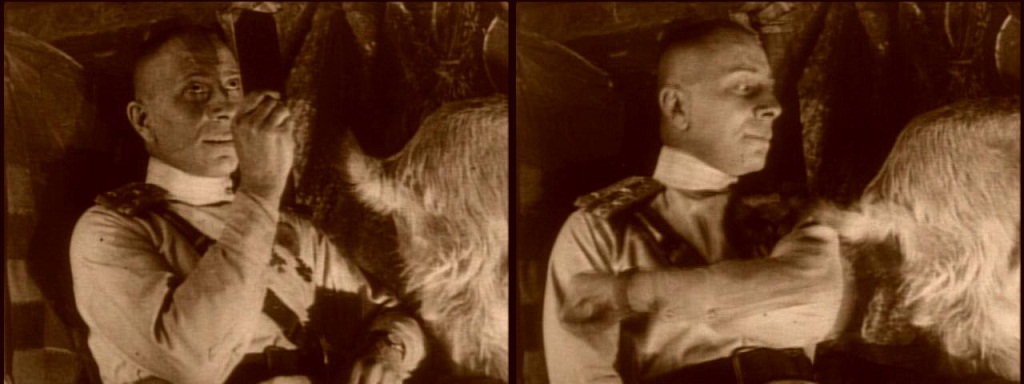
Murnau hired actor Max Schreck to play the film's version of Dracula, Count Orlok. His involvement in the film would become legendary in its own right (more on that later), but in real life he was an actor who had both stage and film experience before he was offered Nosferatu.
Filming took place in Germany (the town shots) and Slovakia (Count Orlok's castle). The production could only afford one camera, so there was only one original negative of the film (!!!).
Dracula is an epistolary novel, where the plot is told through a series of documents--diary entries, letters, newspaper articles, etc. The film keeps this format in tact, using the documents as title cards.
The beginning of the movie starts out just as Dracula does: young lawyer travels to visit Transylvanian Count on business.
Near the middle, it starts to deviate a little: the Count, now revealed to be a vampire, makes his way to Germany (England in the book.)
The ending of the movie differs more widely from the book than the rest of the story (I won't spoil it here).
The character of Van Helsing is almost completely left out of the movie, which made me really sad because I read the book a couple years ago and Van Helsing was my favorite character by far. It would have been nice if the studio had made a part 2 focusing on the Van Helsing parts of the book, but sadly, they never got the chance.
The film was released in 1922 with an ad campaign and a lavish release party and the producers had high hopes for its success. But the fate of the film's legacy was threatened when Bram Stoker's widow sued for copyright infringement and won. At Mrs. Stoker's request, the court ordered that all the existing prints and negatives be destroyed.
Luckily, at least one print survived outside Germany. Copies were made and the film surfaced again in the late 20s. This is why the release date is sometimes listed as 1929: that's when it was first shown in the United States.
The costs of the lawsuit caused Prana Film to declare bankrupty. Albin Grau's vision of a studio producing only supernatural-themed films would be short lived. But in its brief existence, Prana Film did give the world one groundbreaking classic.
___________________________________________________________________________
One interesting thing about reading/watching stuff about vampires is you get to see how vampire lore has evolved over time. Most modern depictions of vampires show the influence of Stoker's characterization of Count Dracula as a cool, suave aristocrat. Nosferatu's vampire is a Count, but has none of the gentlemanly manners of the Count in Stoker's book. He's 100% creepy and is more of a rat/lizard creature than a human.

In addition to the indelible images of Count Orlok that this film contributed to the world, Nosferatu is also the point of origin for the idea that sunlight is fatal to vampires. That was not in earlier vampire fiction, but it entered the canon of vampire lore starting with this film. It demonstrates how much movies play a role in shaping public consciousness. An earlier example from the 1001 list is Birth of a Nation, which established burning crosses and white costumes as KKK iconography.
Nosferatu has inspired at least two feature-length films. The first was Werner Herzog's 1979 film Nosferatu: Phantom of the Night, starring Klaus Kinski (awesome in whatever role he plays). By 1979, Dracula had entered the public domain, so Herzog restored the original character names from the book. He wanted to make a stylistic homage to Nosferatu because he considered it the greatest German film ever produced, and he even copied some shots verbatim. This movie is on the 1001 list, so I'll be watching it at some point.
The second feature film based on or inspired by Nosferatu was Shadow of a Vampire in 2000. Its plot is based on the legend that Max Schreck really was a vampire and director F.W. Murnau (played by John Malkovich) convinced him to appear in Nosferatu, but Murnau doesn't tell the rest of the cast and crew that they're dealing with a real vampire. The myth about Schreck began when someone claimed there was no evidence he had been in any other movies (this was later proved to be false). If it were true, that would have been the greatest casting move in history. Shadow of a Vampire is not on the 1001 list, but I might watch it anyway, because the premise sounds pretty entertaining. The role of Max-Schreck as real vampire" was reportedly written specifically for Willem Dafoe (more inspired casting).
__________________________________________________________________
So that's the general story of Nosferatu. A little more about the nuts and bolts of the movie:
It's one thing to look at pictures of Count Orlok and think he is creepy, but it's a totally other feeling to actually see him in motion.


Nosferatu is Murnau's best known film, but the origins of the film began with producer Albin Grau. When he was fighting in World War I in 1916, a Serbian farmer told Grau that the farmer's father was one of the undead, a vampire. A lifelong student of the occult, Grau was intrigued.
Fast forward to 1921. Grau and partner Enrico Dieckmann established Prana Film for the purpose of producing films with supernatural or occult themes. Remembering the Serbian farmer's tale from five years earlier, Grau decided their first film would be about vampires.
Grau and Dieckmann hired a writer experienced in dark romanticism to write a screenplay based on Bram Stoker's Dracula. The playwright renamed the characters and changed other aspects of the story enough that the filmmakers hoped they could get away with not having film rights to the book.
The resulting screenplay was detailed and rhythmic, filled with copious notes on lighting and camera angles. Murnau would rewrite some portions of the screenplay, but he kept the rhythmic feel in tact, even using a metronome during filming to keep the actors' movements in time with his script notes.
Murnau hired actor Max Schreck to play the film's version of Dracula, Count Orlok. His involvement in the film would become legendary in its own right (more on that later), but in real life he was an actor who had both stage and film experience before he was offered Nosferatu.
Filming took place in Germany (the town shots) and Slovakia (Count Orlok's castle). The production could only afford one camera, so there was only one original negative of the film (!!!).
Dracula is an epistolary novel, where the plot is told through a series of documents--diary entries, letters, newspaper articles, etc. The film keeps this format in tact, using the documents as title cards.
The beginning of the movie starts out just as Dracula does: young lawyer travels to visit Transylvanian Count on business.
Near the middle, it starts to deviate a little: the Count, now revealed to be a vampire, makes his way to Germany (England in the book.)
The ending of the movie differs more widely from the book than the rest of the story (I won't spoil it here).
The character of Van Helsing is almost completely left out of the movie, which made me really sad because I read the book a couple years ago and Van Helsing was my favorite character by far. It would have been nice if the studio had made a part 2 focusing on the Van Helsing parts of the book, but sadly, they never got the chance.
The film was released in 1922 with an ad campaign and a lavish release party and the producers had high hopes for its success. But the fate of the film's legacy was threatened when Bram Stoker's widow sued for copyright infringement and won. At Mrs. Stoker's request, the court ordered that all the existing prints and negatives be destroyed.
Luckily, at least one print survived outside Germany. Copies were made and the film surfaced again in the late 20s. This is why the release date is sometimes listed as 1929: that's when it was first shown in the United States.
The costs of the lawsuit caused Prana Film to declare bankrupty. Albin Grau's vision of a studio producing only supernatural-themed films would be short lived. But in its brief existence, Prana Film did give the world one groundbreaking classic.
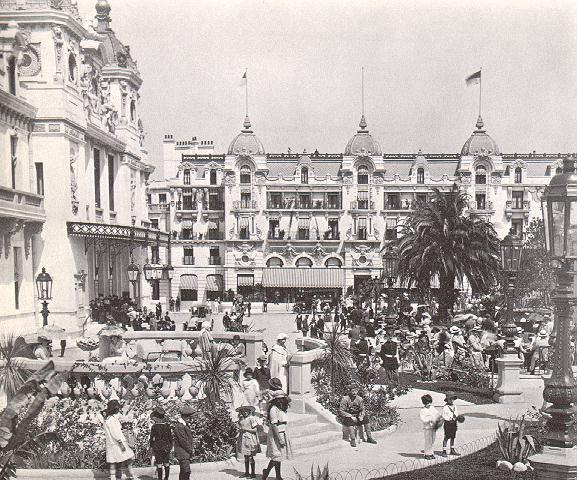
Another part of the film that miraculously survives to this day is the shooting locations. Almost all of the buildings used in the film survived World War II and are still standing in Wismar and Lübeck, Germany, and northern Slovakia. One could feasibly make a pilgrimage there. Maybe Nosferatu tours already exist?
___________________________________________________________________________
One interesting thing about reading/watching stuff about vampires is you get to see how vampire lore has evolved over time. Most modern depictions of vampires show the influence of Stoker's characterization of Count Dracula as a cool, suave aristocrat. Nosferatu's vampire is a Count, but has none of the gentlemanly manners of the Count in Stoker's book. He's 100% creepy and is more of a rat/lizard creature than a human.

In addition to the indelible images of Count Orlok that this film contributed to the world, Nosferatu is also the point of origin for the idea that sunlight is fatal to vampires. That was not in earlier vampire fiction, but it entered the canon of vampire lore starting with this film. It demonstrates how much movies play a role in shaping public consciousness. An earlier example from the 1001 list is Birth of a Nation, which established burning crosses and white costumes as KKK iconography.
Nosferatu has inspired at least two feature-length films. The first was Werner Herzog's 1979 film Nosferatu: Phantom of the Night, starring Klaus Kinski (awesome in whatever role he plays). By 1979, Dracula had entered the public domain, so Herzog restored the original character names from the book. He wanted to make a stylistic homage to Nosferatu because he considered it the greatest German film ever produced, and he even copied some shots verbatim. This movie is on the 1001 list, so I'll be watching it at some point.
The second feature film based on or inspired by Nosferatu was Shadow of a Vampire in 2000. Its plot is based on the legend that Max Schreck really was a vampire and director F.W. Murnau (played by John Malkovich) convinced him to appear in Nosferatu, but Murnau doesn't tell the rest of the cast and crew that they're dealing with a real vampire. The myth about Schreck began when someone claimed there was no evidence he had been in any other movies (this was later proved to be false). If it were true, that would have been the greatest casting move in history. Shadow of a Vampire is not on the 1001 list, but I might watch it anyway, because the premise sounds pretty entertaining. The role of Max-Schreck as real vampire" was reportedly written specifically for Willem Dafoe (more inspired casting).
__________________________________________________________________
So that's the general story of Nosferatu. A little more about the nuts and bolts of the movie:
It's one thing to look at pictures of Count Orlok and think he is creepy, but it's a totally other feeling to actually see him in motion.

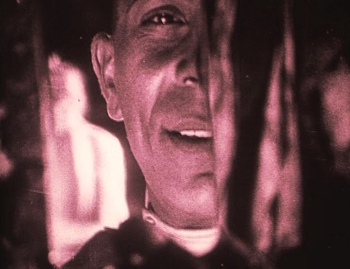
The first time he appears on screen is some of the most awesomely creepy footage I've ever seen. He only blinks once in the entire movie, and he appears to slither across the screen as he moves with quick, tiny steps and hunched over shoulders. Like I said before, he seems like more of a rat/lizard creature than a person, and his character development doesn't go much further than that.
This film has all the striking visuals and effective use of shadow that The Cabinet of Dr. Caligari does, but the main difference is that whereas Caligari was obviously shot on a stage with matte paintings as backgrounds, Nosferatu was shot on location. That does give the film an air of realism, and the Count's movements are all so perfect that I can see why some people did not believe Max Schreck was just playing a role. This movie probably has the widest range of visual effects I've seen yet in a film on the 1001 list.
I was sad they greatly diminished Van Helsing's character, but the changes to the plot make for a movie that's just right in pacing and length. It's available to watch on Netflix. I suggest you check it out.